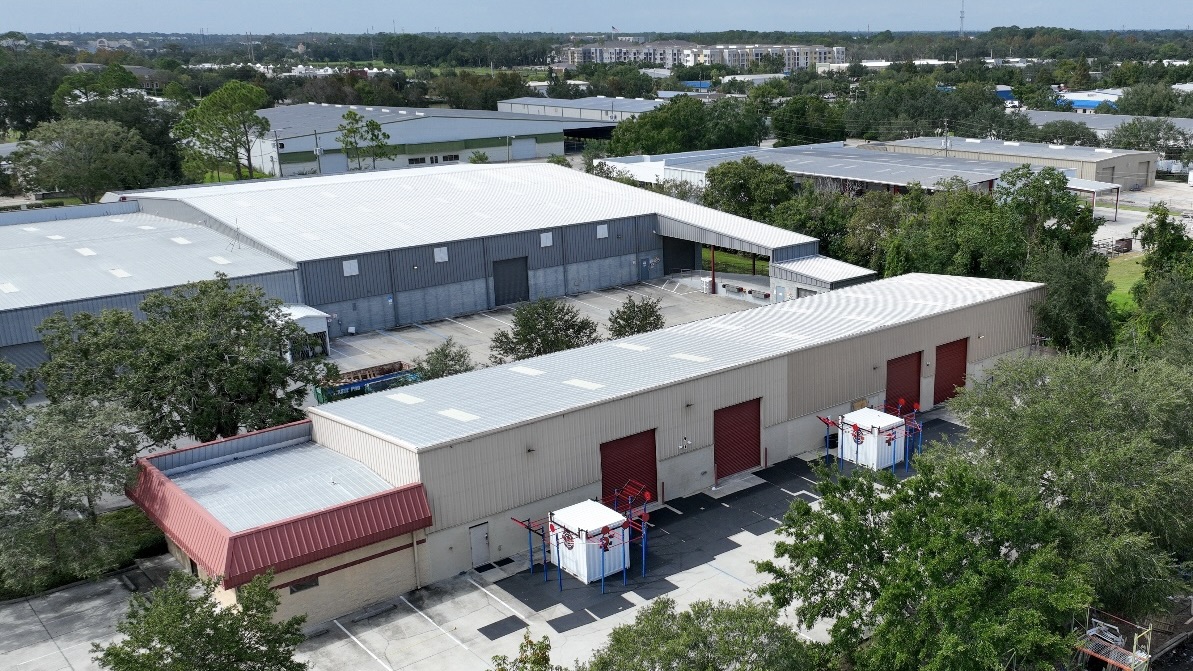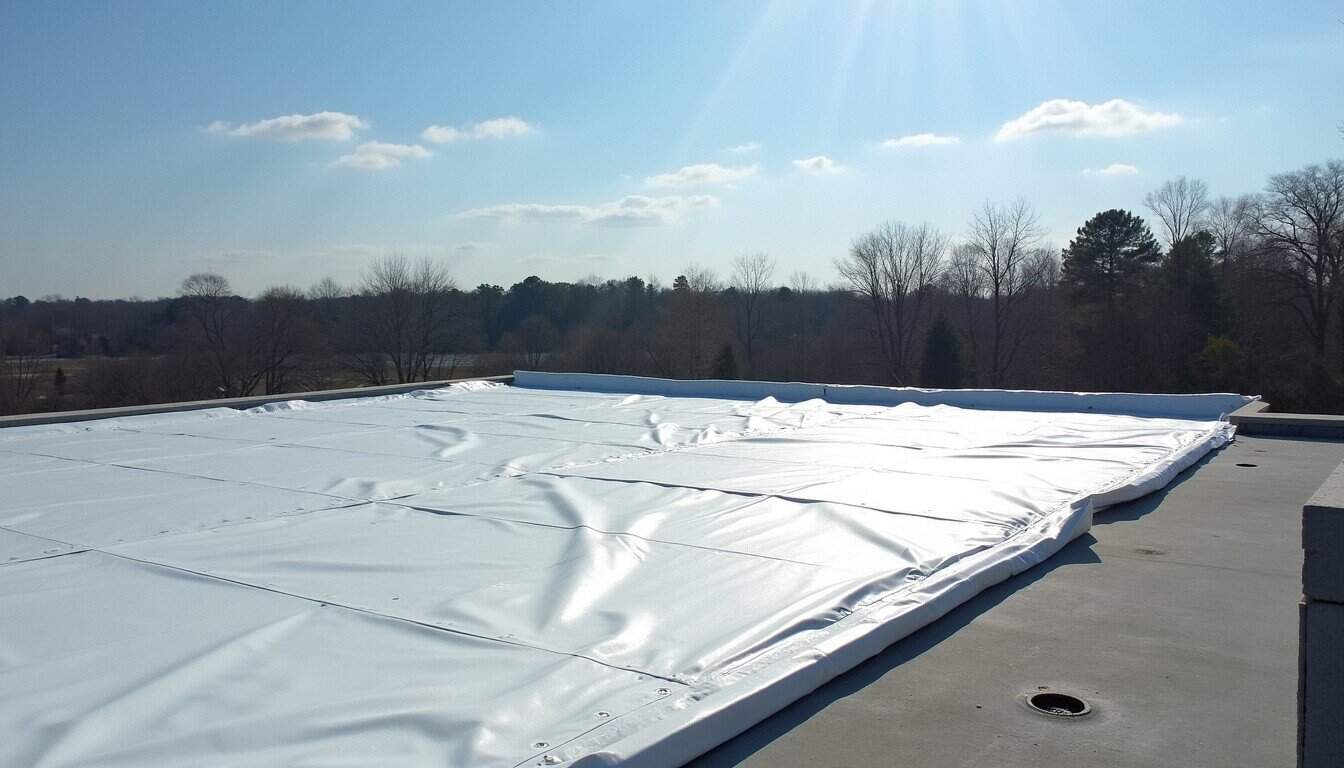
Full-field hail documentation for Knoxville commercial membranes, metal edge, and rooftop equipment.
East Tennessee sits in a corridor that sees real hail most years, usually riding along the same spring and early-summer storm systems that bring severe thunderstorms through the Tennessee Valley. A hail event over Knoxville rarely announces itself on a commercial roof the way it does on a car hood or a residential shingle roof, on a low-slope membrane, the damage is often subtle bruising, cracked coating, or dented metal that only shows up on a roof walk.
What Hail Damage Looks Like on a Commercial Membrane
On EPDM and TPO, hail impact typically shows as circular bruising or soft spots where the membrane's surface has been compressed without an obvious tear. On modified bitumen and built-up roofing, hail knocks granules loose and can expose the asphalt layer beneath. Edge metal, coping caps, gutters, and rooftop unit housings take visible dents that help establish the storm date even when the membrane damage itself is harder to see.
Why the Roof Walk Has to Happen Soon After the Storm
Bruised membrane and granule loss can be difficult to date accurately weeks or months later, especially once additional rain, heat cycling, or a second storm adds new wear. A prompt roof walk with dated photos, a sketch of affected zones, and measurements ties the damage to a specific hail event, which is exactly what a carrier's adjuster needs to evaluate the claim.
Documenting the Full Field, Not a Sample Section
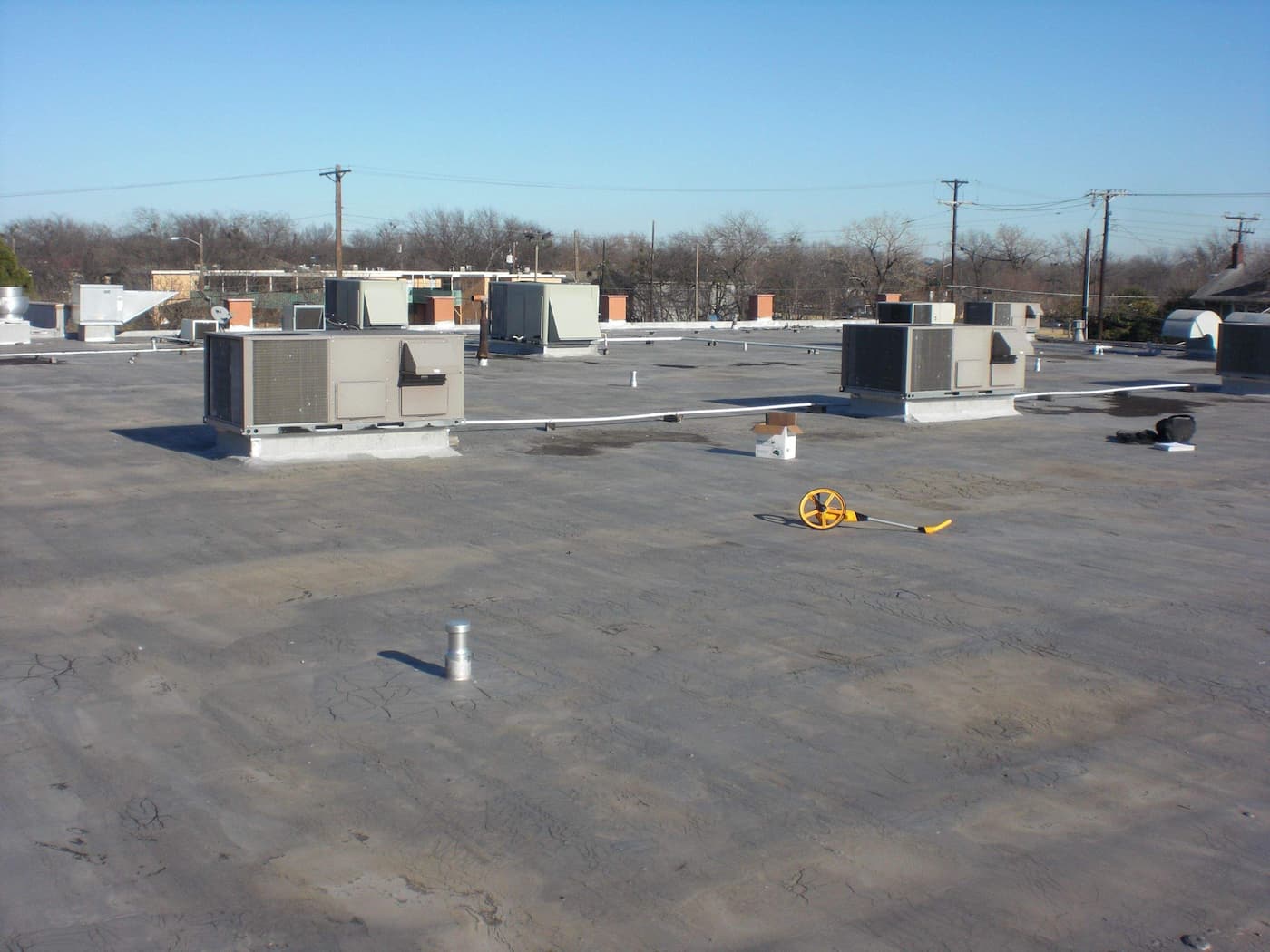
A quick estimate sometimes relies on a small test square to represent the whole roof. We walk the entire field, log bruising density by section, and photograph rooftop equipment, drains, and edge details separately, because hail impact is rarely uniform across a large commercial roof, a section near a parapet wall or exposed corner often shows more damage than a sheltered center field.
From Documentation to a Repair or Replacement Conversation
Once the field is documented, we lay out what the evidence supports: isolated spot repair where bruising is limited, a recover option where the deck and insulation are sound but the membrane is compromised across a wide area, or a full replacement scope where hail damage combines with an aging roof system. That comparison goes into the claim file alongside the photo and measurement record.
We're your roofing contractor, not a public adjuster, we document and substantiate the hail damage so you and your adjuster work from an accurate scope. If a storm has come through and you suspect hail impact, send the building address and the approximate storm date and we'll schedule a roof walk.