Roof-level documentation and adjuster coordination for hail, wind, and storm-related commercial roof claims across Knoxville.
A commercial roof insurance claim usually starts the same way in Knoxville: a storm moves through the Tennessee Valley, a facility manager notices a leak or a maintenance crew spots hail bruising during a routine walk, and the building owner has to figure out what the policy actually covers before anyone touches the roof. The gap between "there's damage" and "the carrier approved a scope" is where most claims stall, and it is almost always a documentation gap, not a coverage gap.
Our role on a commercial roof insurance claim is narrow and specific: inspect the roof, document what we find with photos, measurements, and moisture readings where relevant, and produce a written damage assessment that holds up when your adjuster walks the same roof. We are not a public adjuster and we do not negotiate settlement terms with your carrier. What we bring is roof-level evidence, the kind that keeps a claim from being scoped off a windshield estimate or a partial sample.
What a Commercial Roof Insurance Claim Actually Requires
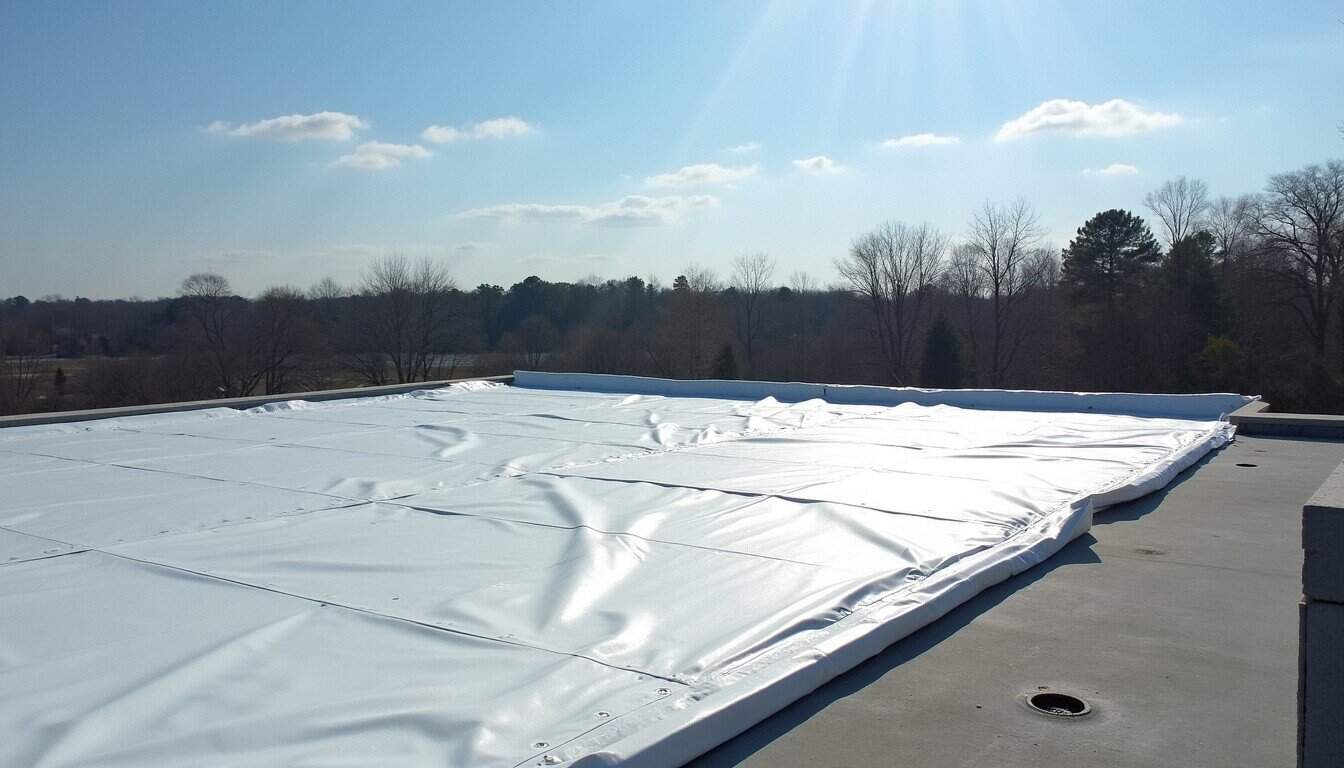
Most policies require prompt notice of loss, photo and written documentation of the damage, and a scope that ties repair or replacement costs to a specific cause, hail impact, wind uplift, a fallen limb, or a documented storm date. On a low-slope commercial membrane, damage is often not visible from the ground, which is why the roof walk has to happen before repairs start, not after a tarp goes up and the evidence gets covered.
Documenting Damage Before the Adjuster Arrives
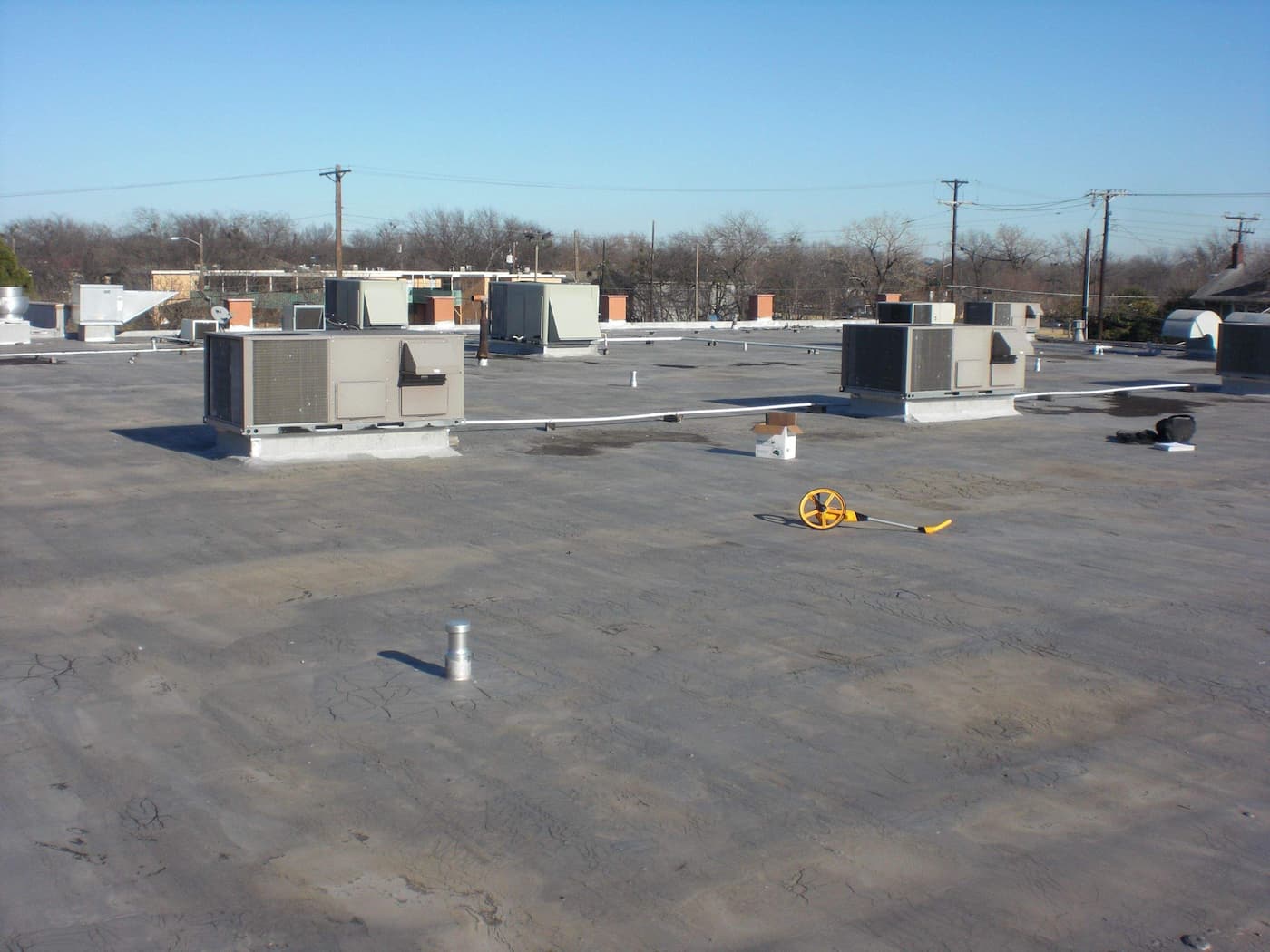
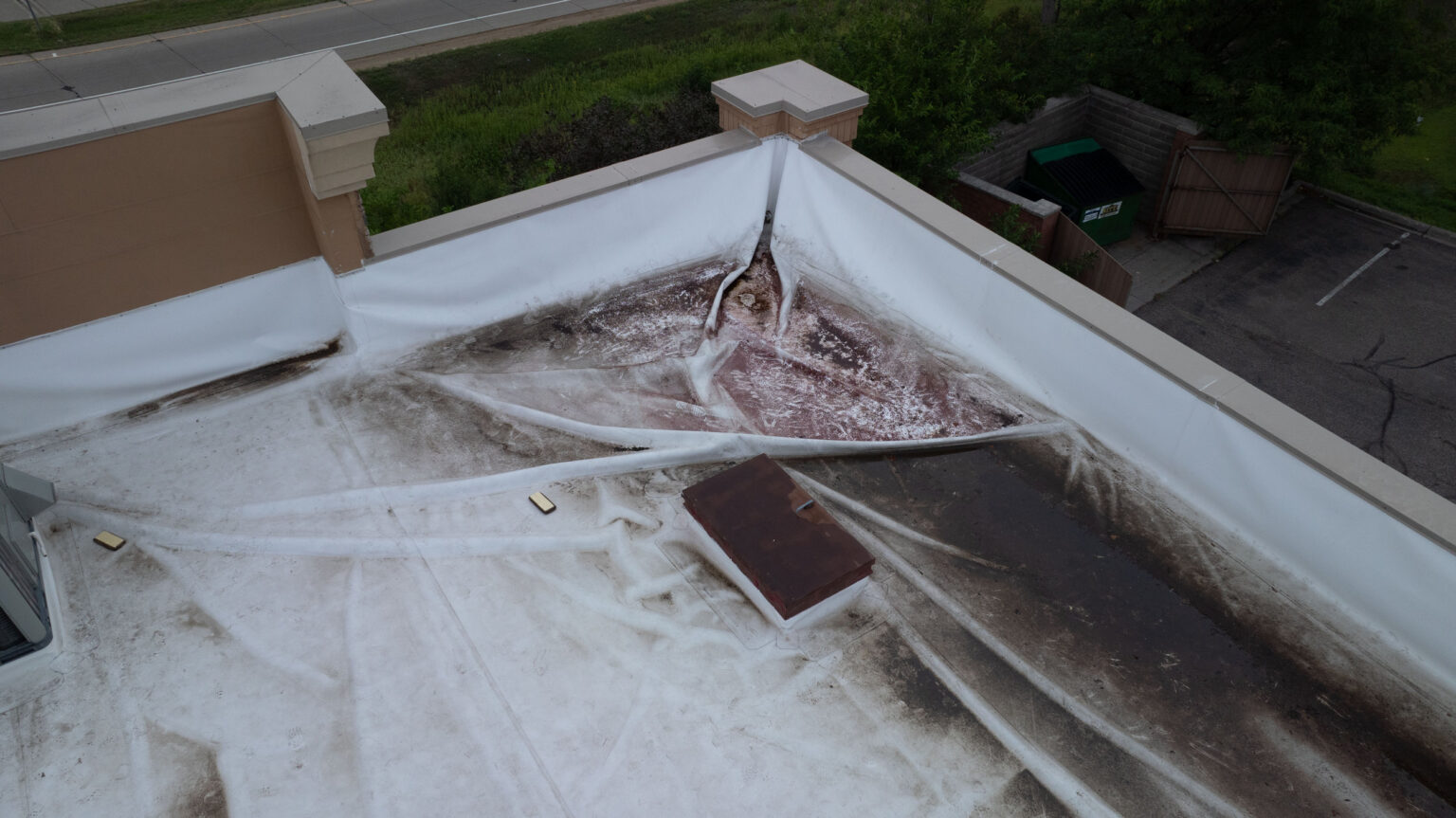
We photograph and log every affected area of the roof: membrane punctures, hail bruising on single-ply, dented metal edge and coping, displaced ballast, torn flashing, and any interior evidence of water intrusion below the deck. Measurements and sketch locations get tied to building elevations so the file reads clearly to someone who has never stood on the roof. That file is what your adjuster reviews before they ever climb the ladder.
Meeting the Adjuster on the Roof
When the carrier schedules its inspection, we walk the roof alongside the adjuster. Our documentation gives them a starting point instead of a blank field, and we point out damage that is easy to miss from a quick pass, soft spots near drains, granule loss patterns on modified bitumen, or fastener backout along the perimeter. We answer roofing-specific questions directly; coverage and settlement decisions stay with the adjuster and the carrier.
Building the Complete Scope Beyond the Visible Damage
A scope that only lists the obvious damage tends to leave money and repair steps on the table. We itemize the full repair scope including code or ordinance upgrades the jurisdiction may require on a partial reroof, matching material for sections that can't be spot-repaired without a visible seam, and related components, edge metal, drains, penetration flashing, that are frequently damaged alongside the membrane but easy to overlook in a fast estimate.
When a Claim Comes Back Denied or Underpaid
If a scope comes back short, we re-inspect and compare our original documentation against the carrier's findings, then produce an updated damage assessment that spells out what appears to be missing, not to argue with the carrier, but to give you and your adjuster or public adjuster the roof-level facts needed to request a second look.
We're your roofing contractor, not a public adjuster, we document and substantiate the roof damage so you and your adjuster work from an accurate, complete scope. Send us the building address, the storm date if known, and any photos already taken, and we'll schedule a roof walk from there.