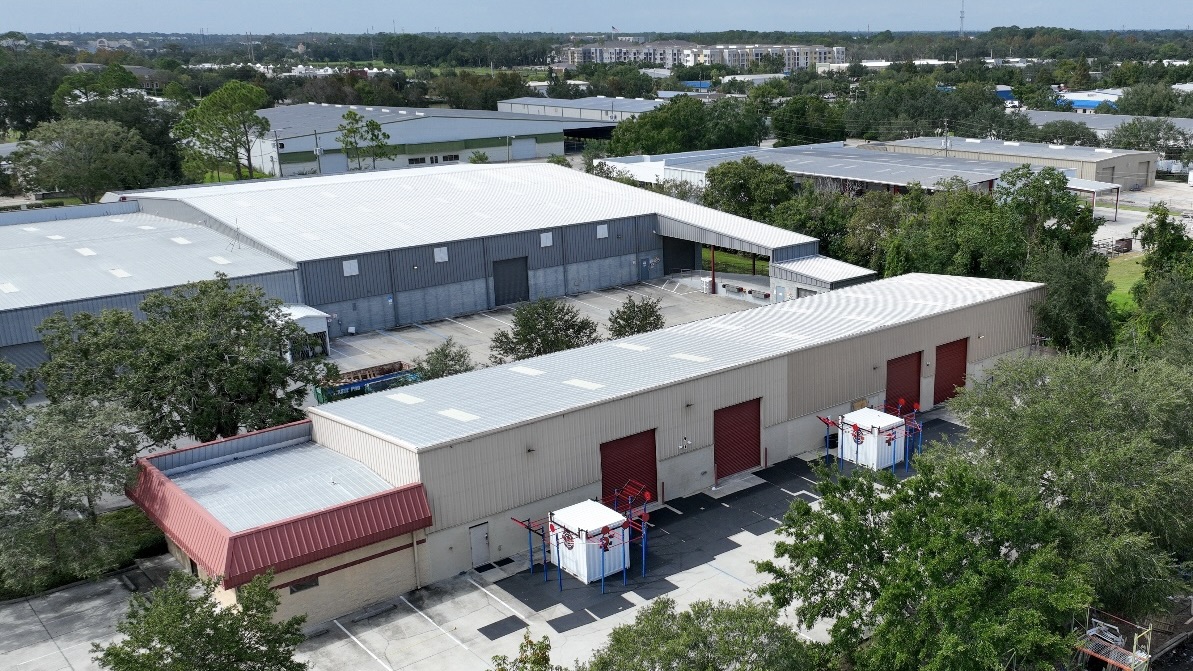
Commercial roofing for self-storage facilities, mini-storage buildings, and climate-controlled storage properties throughout Knoxville, TN.
Metro Storage LLC operates self-storage facilities in the Knoxville, Tennessee market, including locations along Kingston Pike and near the Papermill Drive corridor that serve Knox County's mix of University of Tennessee students, residential movers, and small business operators in the foothills of the Great Smoky Mountains. East Tennessee's climate combines the humidity and summer heat of the mid-South with the topographic influence of the surrounding ridge-and-valley terrain, creating localized weather patterns that produce higher than average annual rainfall and occasional ice storm events that can be more severe on the higher-elevation commercial districts west of the city center.
Knoxville averages over 48 inches of rainfall annually, and that precipitation is distributed fairly evenly across the calendar year with a slight concentration in winter and spring. For a self-storage campus with 60,000 to 100,000 square feet of flat roof, that sustained annual rainfall total means the drainage system and membrane must perform reliably in every month, not just during an obvious wet season. Drains that are adequately sized for light summer showers can be overwhelmed by the slow-moving frontal systems that park over East Tennessee in March and April and produce extended multi-day rainfall events.
Tennessee's climate zone position makes it a transitional market where both summer heat management and winter freeze protection are legitimate design considerations. August average highs in Knoxville approach 87°F, and the summer humidity amplifies the perceived and actual thermal stress on roof membranes. January temperatures occasionally drop below 15°F, and the ridge-and-valley terrain can channel cold air into the downtown and Farragut corridors in ways that make local temperatures colder than regional averages suggest. A self-storage roof assembly must be insulated to address both conditions without compromise.
Climate-controlled storage is a competitive necessity in Knoxville's saturated market, and the roof system's thermal performance determines how efficiently the HVAC can maintain stable unit temperatures through both extremes. We specify polyiso board at R-25 for climate-controlled Knoxville projects, with the vapor retarder positioned for the winter-dominant vapor drive direction that applies to Climate Zone 4, which covers most of Knox County. Tapered insulation creating positive drainage slopes ensures that the assembly performs both thermally and hydraulically.
Ice storm events in Knoxville are a roof management reality. Unlike Midwest cities with predictable winter snow patterns, Knoxville's winter weather often arrives as freezing rain that coats flat roof surfaces with a layer of clear ice. That ice adds structural load and can seal drain openings completely, causing ponding water to accumulate beneath the ice layer as rain continues to fall on top of it. Our pre-winter inspection service for Knoxville facilities includes checking parapet drainage gaps and overflow scupper height to ensure that any ice-sealed ponding condition has an emergency drainage path before water depth reaches a structurally critical level.
Membrane selection for Knoxville storage facilities favors fully adhered systems because of the region's combination of moderate wind exposure and the humidity conditions that can drive vapor migration under mechanically fastened membranes. We typically specify fully adhered 60-mil TPO over polyiso insulation as the standard system for re-roofing projects, with the fully adhered bond providing both vapor control continuity and wind uplift resistance without relying on fastener patterns that can work loose over time in thermally active decks.
Many Knoxville self-storage facilities were built during the development boom of the 1990s and early 2000s, and those buildings are now at the age where original roofing systems are approaching or have exceeded their expected service lives. Modified bitumen roofs from that era typically show fatigue cracking at laps, failed pitch-pan flashings, and insulation that has absorbed moisture through progressively larger seam openings. Our pre-replacement assessment identifies the condition of the underlying deck, frequently steel, and any corrosion that will require treatment before new insulation and membrane can be installed.
Tenant coordination during Knoxville re-roofing projects involves awareness of the University of Tennessee academic calendar. Facilities near the UT campus experience peak activity at the start and end of each semester when students are moving in and out. We schedule active re-roofing work away from those peak periods when possible and, when project timelines require working during semester transitions, we ensure that unit access corridors are completely clear and unaffected by work in progress.
Our Knoxville commercial roofing team holds Tennessee contractor licensing for commercial roofing and maintains all required insurance and bonding for Knox County and the surrounding East Tennessee service area. Manufacturer certifications allow us to issue NDL warranties on qualifying new installations, and our inspection and maintenance programs keep Knoxville storage operators current on roof condition without requiring them to climb to the roof themselves.
What information should we send before a Built-Up Roofing roof walk?
Before a Built-Up Roofing roof walk, send the building location, roof age if known, roof access instructions, leak photos, tenant restrictions, and prior roof reports. Those details let us shape the inspection around the actual roof problem instead of arriving with a generic checklist.
Can Built-Up Roofing be handled while the building stays occupied?
For Built-Up Roofing, occupied-building work depends on access, odor, noise, staging room, weather exposure, and how much roof must be opened at one time. We phase the work around dry-in, tenant protection, loading paths, and the operating schedule below the roof.
How do we compare repair, coating, recover, and replacement for Built-Up Roofing?
For Built-Up Roofing, we compare moisture evidence, layer count, deck condition, drainage, age, storm exposure, roof traffic, and future use before naming a scope. That evidence is what separates a repair file from a restoration plan, a recover option, or a replacement budget.
Do you promise manufacturer certification or insurance approval for Built-Up Roofing?
For Built-Up Roofing, we do not invent credentials, promise claim outcomes, or write warranty language before the facts support it. We document conditions, identify manufacturer or carrier questions, and keep recommendations tied to reviewable roof evidence.
What makes Knoxville planning different for Built-Up Roofing?
Knoxville planning for Built-Up Roofing has to account for downtown access, UT and hospital-area traffic, Pellissippi and Oak Ridge industrial corridors, humid Tennessee Valley heat, severe thunderstorms, hail, freeze-thaw movement, leaf debris, and wind-driven rain.