Roofing for apartment complexes, multifamily housing, and HOA-managed communities throughout Knoxville, TN.
Knoxville's multifamily housing market has evolved dramatically with the University of Tennessee's growth and the broader East Tennessee economic expansion of the past decade. Student-housing complexes near campus in neighborhoods like Fort Sanders and the Cumberland Avenue Strip corridor operate alongside conventional apartment communities in suburbs like West Knox County, Powell, and the Hardin Valley area that serve the region's growing professional population. These two market segments have different ownership profiles, different maintenance cultures, and different roofing needs, but both share Knoxville's challenging weather environment, which combines genuine winter icing with the moisture loading that comes from sitting in a Smoky Mountain rain shadow that delivers over 47 inches of annual precipitation.
Tennessee's freeze-thaw cycling is a primary threat to any commercial roofing membrane in the Knoxville market. January and February typically deliver multiple freeze cycles where daytime temps climb above freezing before dropping overnight, and that repetitive mechanical stress opens seam laps, works sealant loose at penetration flashings, and drives moisture into the top layer of roofing insulation. Apartment buildings along the Western Avenue corridor and in older neighborhoods like Lonsdale and Mechanicsville, where building vintage ranges from the 1950s through the 1980s, commonly have roofing assemblies that have accumulated multiple repair layers rather than receiving systematic replacement, and those assemblies are now exhibiting the compounding failures that deferred maintenance produces over decades.
Property management companies overseeing student-housing properties near UT Knoxville face a particularly unforgiving audience. Students and their parents document maintenance issues immediately and post reviews that affect leasing velocity for the following year. A water intrusion event in a student apartment building during move-in week in late July is a reputational and operational crisis that generates immediate demands for remediation. The roofing envelope on these properties must be in demonstrably sound condition before the academic year begins, and that means completing any needed roof work during the April through June window when units are between lease cycles and access for roofing crews is uncomplicated.
Knox County's residential real estate investor community has been active in acquiring older apartment complexes near downtown Knoxville, where the broader Old City and Market Square revitalization has driven up valuations and rent potential. Many of the brick and masonry apartment buildings in this corridor were constructed between 1920 and 1960 with tar-and-gravel built-up roofing over concrete or wood-plank decks. Replacing those original systems involves careful deck inspection for soft spots and structural compromise, compatibility assessment for new insulation and membrane systems, and sometimes code-upgrade requirements for penetrations and parapet caps that a permit inspection will catch. Investors who underwrite these projects without engaging a commercial contractor in the due-diligence process routinely discover that the actual replacement scope exceeds their pro-forma assumption.
HOA-managed communities in West Knoxville, the townhome and villa associations that proliferated through Farragut, Turkey Creek, and Hardin Valley during the 2000s and 2010s, are now encountering original roofing systems that are showing age. Many of these buildings have dimensional shingle profiles on moderate-pitched roofs with standard felt underlayment. Tennessee's adoption of modified ICC building codes means that replacement systems must meet current energy-code insulation requirements when full replacement is triggered by permit, and the ice-and-water shield requirements for low-slope and valley conditions have also become more prescriptive since these roofs were first installed. HOA boards approving roofing replacements need contractors who understand those current code requirements and specify accordingly.
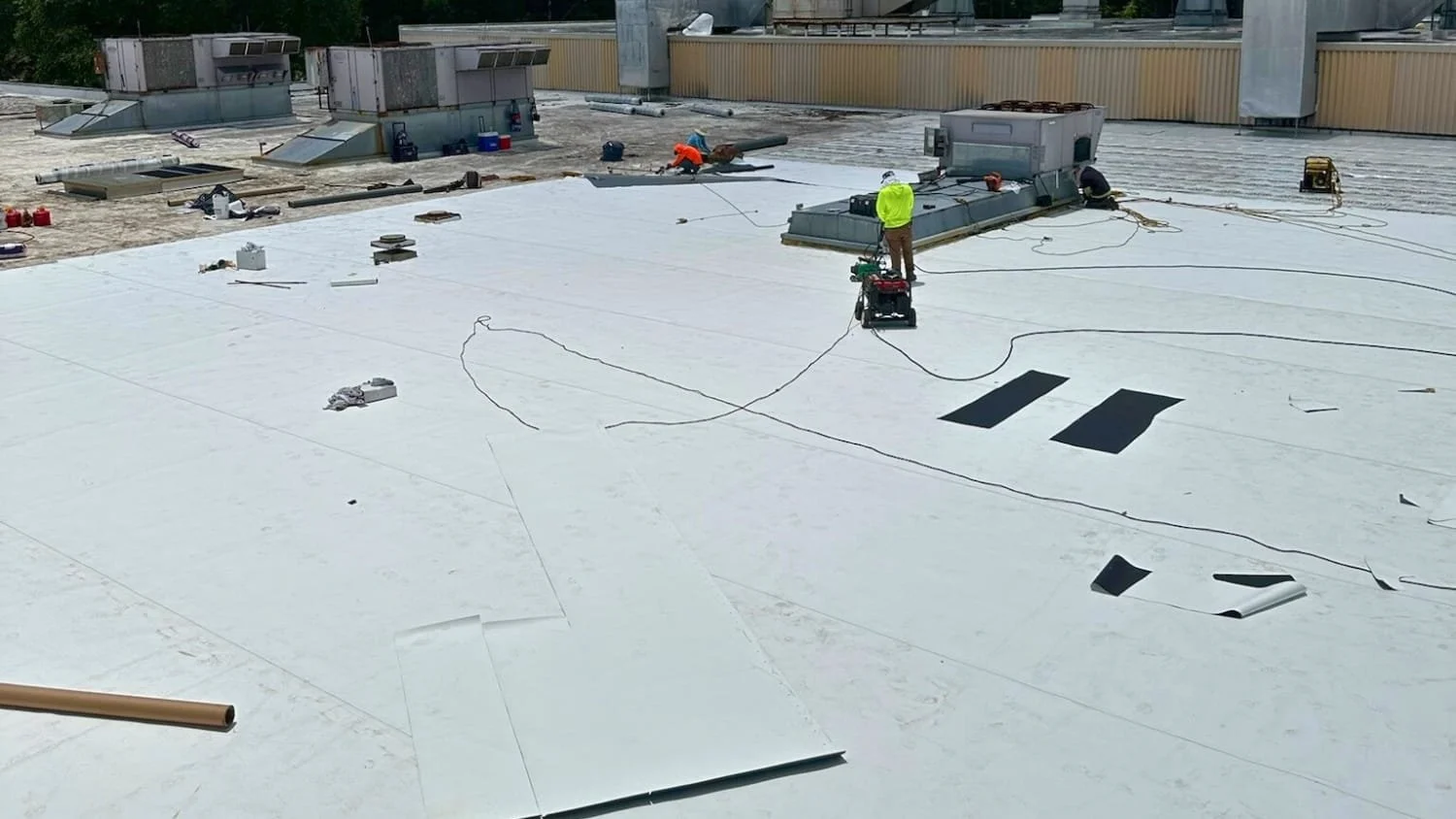
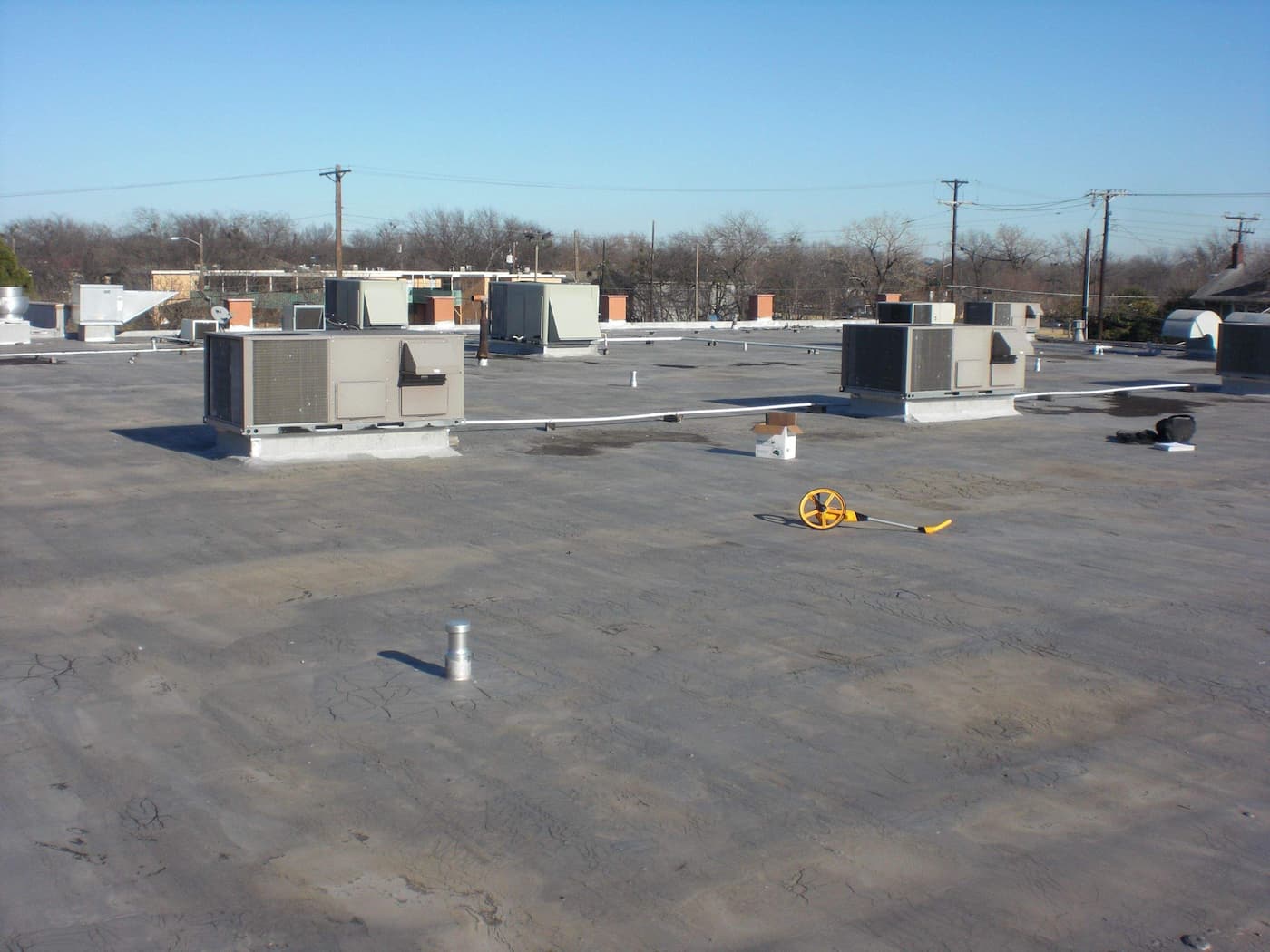
Flat-roof commercial buildings that have been converted to multifamily use, a segment of the Knoxville market that has grown with the adaptive-reuse trend in Old North Knoxville and downtown, present drainage challenges that are distinct from purpose-built apartment structures. Industrial and commercial buildings were not always designed with apartment-level rooftop mechanical loads in mind, and the penetration count increases substantially when HVAC units are added for individual apartment climate control. Each new penetration is a potential intrusion point, and the flashings around mechanical curbs on flat-roof converted buildings require commercial-grade installation, lead or galvanized metal counterflashing properly integrated into the membrane, not caulked sheet-metal fabrication that will fail within a few years of exposure.
Knoxville experiences occasional severe thunderstorms and damaging straight-line wind events, particularly during the spring severe weather season from March through May. Hail events in East Tennessee are generally less frequent than in the Midwest or southern Plains, but they occur, and a single high-intensity hail event can accelerate shingle granule loss by years and compromise TPO membranes at seam lap areas. The April 2020 storms that impacted portions of Knox and Anderson counties generated significant roofing claims, and property owners who had current condition documentation processed claims more smoothly than those who had to argue about pre-existing versus storm-caused damage with adjusters.
Energy efficiency is an increasingly relevant factor in Knoxville roofing decisions as TVA rates and utility-inclusive lease economics draw more owner attention to operating cost management. A reflective TPO or silicone-coated membrane on a flat-roof apartment building in Knoxville's relatively moderate climate can reduce cooling energy consumption for the units below the roof deck measurably. In buildings where the owner pays electricity for common areas or provides utility-inclusive leases, that efficiency gain directly improves NOI. Tennessee Valley Authority's commercial energy programs also periodically offer rebates for qualifying cool-roof installations, a cost-offset worth investigating before a replacement project is finalized.
For Knoxville multifamily property owners ready to move from reactive patch maintenance to proactive capital management, engaging a qualified commercial roofing contractor for a portfolio-wide assessment is the right starting point. The East Tennessee commercial roofing market includes both qualified regional contractors with multifamily experience and smaller operators more accustomed to residential work who take on commercial projects without the product authorization, equipment, or project management infrastructure that apartment-scale roofing requires. Verifying Tennessee contractor licensing, manufacturer authorization status, and specific multifamily project references are the baseline qualification criteria that separate contractors who can execute a 40,000-square-foot apartment reroof from those who cannot.
What information should we send before a Built-Up Roofing roof walk?
Before a Built-Up Roofing roof walk, send the building location, roof age if known, roof access instructions, leak photos, tenant restrictions, and prior roof reports. Those details let us shape the inspection around the actual roof problem instead of arriving with a generic checklist.
Can Built-Up Roofing be handled while the building stays occupied?
For Built-Up Roofing, occupied-building work depends on access, odor, noise, staging room, weather exposure, and how much roof must be opened at one time. We phase the work around dry-in, tenant protection, loading paths, and the operating schedule below the roof.
How do we compare repair, coating, recover, and replacement for Built-Up Roofing?
For Built-Up Roofing, we compare moisture evidence, layer count, deck condition, drainage, age, storm exposure, roof traffic, and future use before naming a scope. That evidence is what separates a repair file from a restoration plan, a recover option, or a replacement budget.
Do you promise manufacturer certification or insurance approval for Built-Up Roofing?
For Built-Up Roofing, we do not invent credentials, promise claim outcomes, or write warranty language before the facts support it. We document conditions, identify manufacturer or carrier questions, and keep recommendations tied to reviewable roof evidence.
What makes Knoxville planning different for Built-Up Roofing?
Knoxville planning for Built-Up Roofing has to account for downtown access, UT and hospital-area traffic, Pellissippi and Oak Ridge industrial corridors, humid Tennessee Valley heat, severe thunderstorms, hail, freeze-thaw movement, leaf debris, and wind-driven rain.