Acres of low-slope roof, wind and jet-blast exposure, and an airfield that never closes, terminal roofing tailored to airport operations from day one.
An Airport Doesn't Run on a Commercial Timeline
McGhee Tyson Airport in Alcoa is the front door to East Tennessee, with American, Delta, and United service and a terminal that has been steadily expanding to keep up with regional growth. It is also co-located with the Tennessee Air National Guard's 134th Air Refueling Wing and its KC-135 tanker operations, which means a roof here lives beside both civilian and military flight activity. None of that pauses for roofing. Every access point, every material lift, and every crew deployment has to be coordinated with the airport's facilities department, the FAA Part 139 safety program, and in places TSA security protocol. We build that coordination into the scope before the contract is signed, not after the trucks show up.
That single fact shapes the whole job. A terminal reroof is not a tear-off scheduled around the weather and crew availability; it is a sequence negotiated around gate operations, security boundaries, and an airfield that runs around the clock.
Big, Flat, and Unforgiving of Standing Water
Terminal roofs cover large, flat, low-slope expanses, often with minimal pitch over long runs. On a roof that size, drainage design is everything and ponding tolerance is near zero, because standing water on a wide low-slope deck ages the membrane fast and overloads the structure during East Tennessee's heavy summer rains. We design the slope and drainage to clear water completely, usually with a tapered insulation system that corrects the flat areas where water otherwise sits.
Wind, Jet Blast, and Mechanical Density
Airside roofs face exposure that a comparable logistics building never sees. Jet blast and the open, unobstructed wind across the airfield demand membrane adhesion and ballast specifications beyond standard commercial, because a membrane that lifts at the edge on a terminal roof is both a leak and a foreign-object-debris hazard near aircraft. We specify attachment and edge metal for those real uplift conditions rather than a generic perimeter detail.
Terminal mechanical density is also far higher than ordinary commercial. The HVAC serving a concourse full of travelers is heavier and more numerous than what sits on an office of the same footprint, which means more curbed penetrations and more flashing touchpoints to maintain. Our pre-project survey documents every curb, its height, and its clearance before we write the work plan, and oversized equipment curbs and complex through-penetrations get engineered individually. Standard residential-pattern flashing has no place on an aviation structure.
Aviation-Adjacent Buildings Carry the Same Rules
The terminal is only part of an airport campus. Cargo facilities, the rental-car center, FBO and aircraft-maintenance hangars, and any hotel structures on airport property each present their own roofing challenges, but the airport coordination requirement does not go away anywhere on the field. Our crews treat badging and security access at any part of the campus as non-negotiable and planned for, never discovered onsite. Knoxville's general aviation also includes Downtown Island Home Airport on the city's east side, a reliever field where the security protocols are lighter but the building types, high-bay hangars with wide clear spans, are often more demanding structurally.
Systems, Hangars, and Closeout
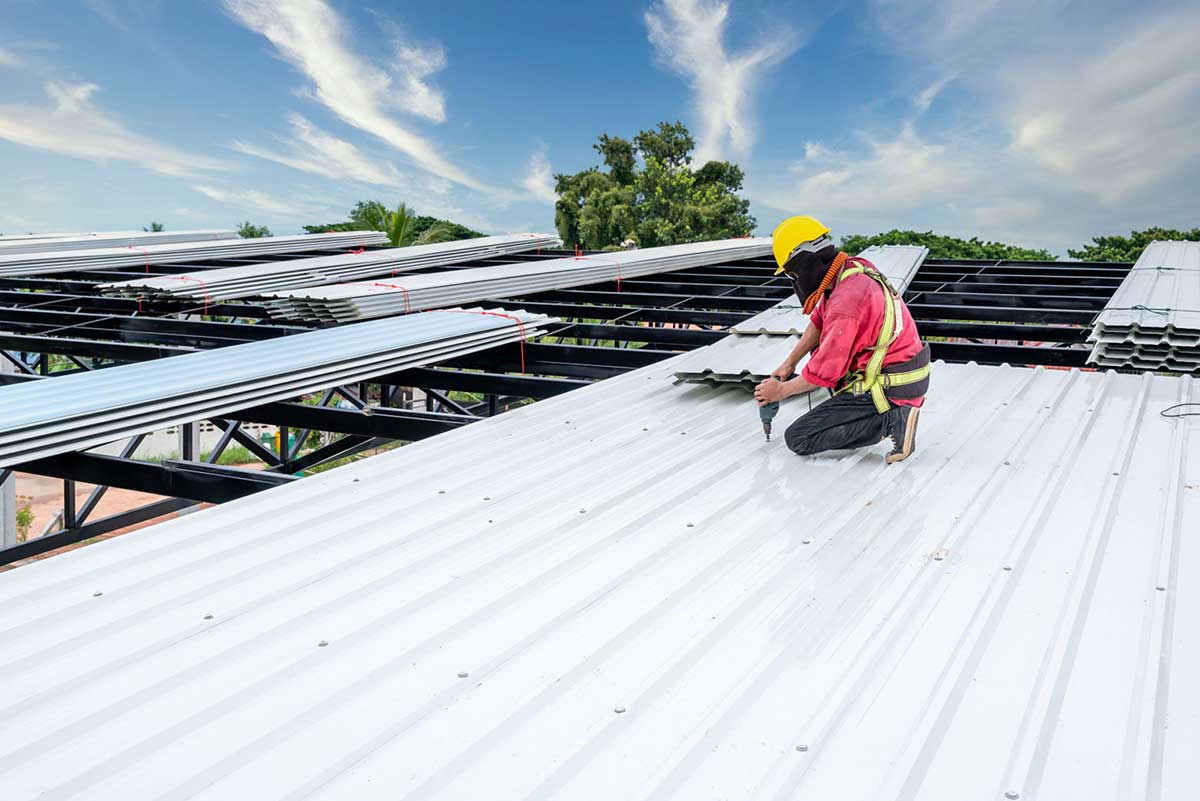
Most terminal reroofing in the Knoxville area uses a TPO or PVC single-ply membrane over a tapered insulation system designed to improve drainage and eliminate ponding. For new high-bay aviation structures and hangars, standing-seam metal is frequently the right call. The selection depends on the existing deck, its load capacity, and the operational constraints of the building, so we develop the specification after walking the roof with the facilities engineer rather than bringing a predetermined answer.
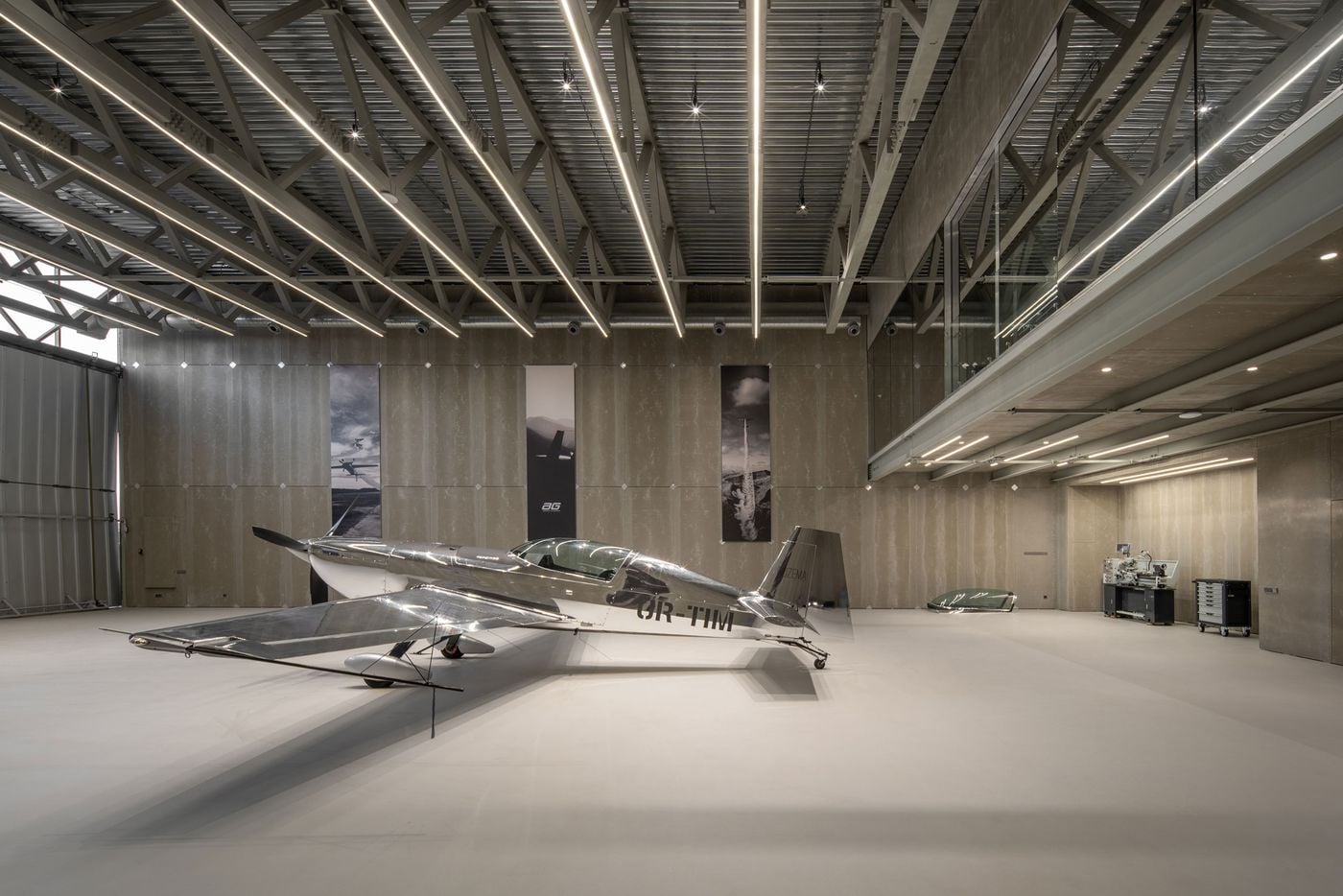
High-bay hangars deserve specific attention. A single-bay private hangar or a multi-unit FBO complex with wide-flange steel or a pre-engineered building system generates uplift and thermal-movement behavior that a contractor has to understand before specifying the seam geometry and fastening pattern. We have specified and installed those systems in Knoxville and across Tennessee, and we do not learn those lessons on someone's active hangar.
Airside work raises the bar on planning. Crane lifts and any work near active movement areas are scheduled in approved windows and coordinated with the FAA NOTAM process where required, and we do not mobilize crew without confirmed airside authorization, that is a baseline we enforce, not a favor we ask. Throughout, we keep our documentation honest: what we observed, what we could not verify without opening the roof, what needs containment now, and what belongs in a capital plan, so airport leadership can compare repair, recover, and replacement on the evidence.
Airport & Aviation Roofing Questions
How do you handle scheduling at an operational airport like McGhee Tyson?
We work with the airport facilities department and the FAA Part 139 coordinator to develop a phased plan approved by airport operations. Material deliveries, crane lifts, and any work near airside areas run in approved windows and are coordinated with the FAA NOTAM process where required. It is a standard part of our project setup, not an exception.
What roof systems suit large-span terminal roofs?
Most terminal reroofing uses a TPO or PVC single-ply membrane on a tapered insulation system designed to improve drainage and address ponding. For new high-bay structures and hangars, standing-seam metal is often specified. The choice follows the existing deck, load capacity, and operational constraints, decided after walking the roof with your facilities engineer.
How do you deal with the density of HVAC and penetrations on terminals?
Terminal mechanical density is far higher than standard commercial. Our pre-project survey documents every penetration, curb height, and clearance before the work plan is written, and flashing for oversized curbs and complex through-penetrations is engineered individually. We do not use standard residential-pattern details on aviation structures.
Can you work on airside structures near active movement areas?
Yes, with appropriate badging and in full coordination with airfield operations. Airside work requires a higher level of pre-planning and crew credentialing, which we factor into the bid timeline. We do not mobilize crew members without confirmed airside authorization.
Do you handle hangar roofing for FBOs and general aviation?
Yes. From a single-bay private hangar to a multi-unit FBO complex, high-bay hangars are a regular part of our work in Knoxville. Wide-flange steel and pre-engineered building systems have specific uplift and thermal-movement characteristics, and we specify the seam geometry and fastening to match them.