The Leak That Never Came Through a Hole
Ask most people to describe a roof failure and they will picture rain finding a gap. The damage we are called to diagnose most often on Knoxville commercial roofs is quieter and harder to catch: water that never breached the surface at all. It starts as vapor rising off the building's interior, condenses inside the roof assembly when it hits a cooler layer, and works on the insulation, the deck, and the membrane from below. By the time it surfaces as a blister or a soft, ridged patch you can feel underfoot, the assembly is usually wet across far more area than the visible symptom lets on. This is its own failure mode, distinct from storm damage and distinct from ordinary aging, and it demands a different diagnosis.
Our climate keeps this problem well fed. Long, humid summers, damp mild shoulder seasons, and buildings running heavy interior moisture loads all push vapor up toward the roof. We see it throughout the warehouse and manufacturing stock along the I-40 and I-75 corridors and inside the Forks of the River Industrial Park, in laundries, food-processing plants, and pool enclosures where interior humidity runs high year-round, and in the older institutional and downtown buildings near the University of Tennessee where the original vapor detailing predates anything we would specify today. The common thread is interior humidity meeting a roof assembly that was never built to manage it.
Reading the Damage by Its Stage
Once vapor condenses inside the roof, the deterioration follows a fairly predictable arc, and pinning down which stage a roof is in tells us how large the repair truly is.
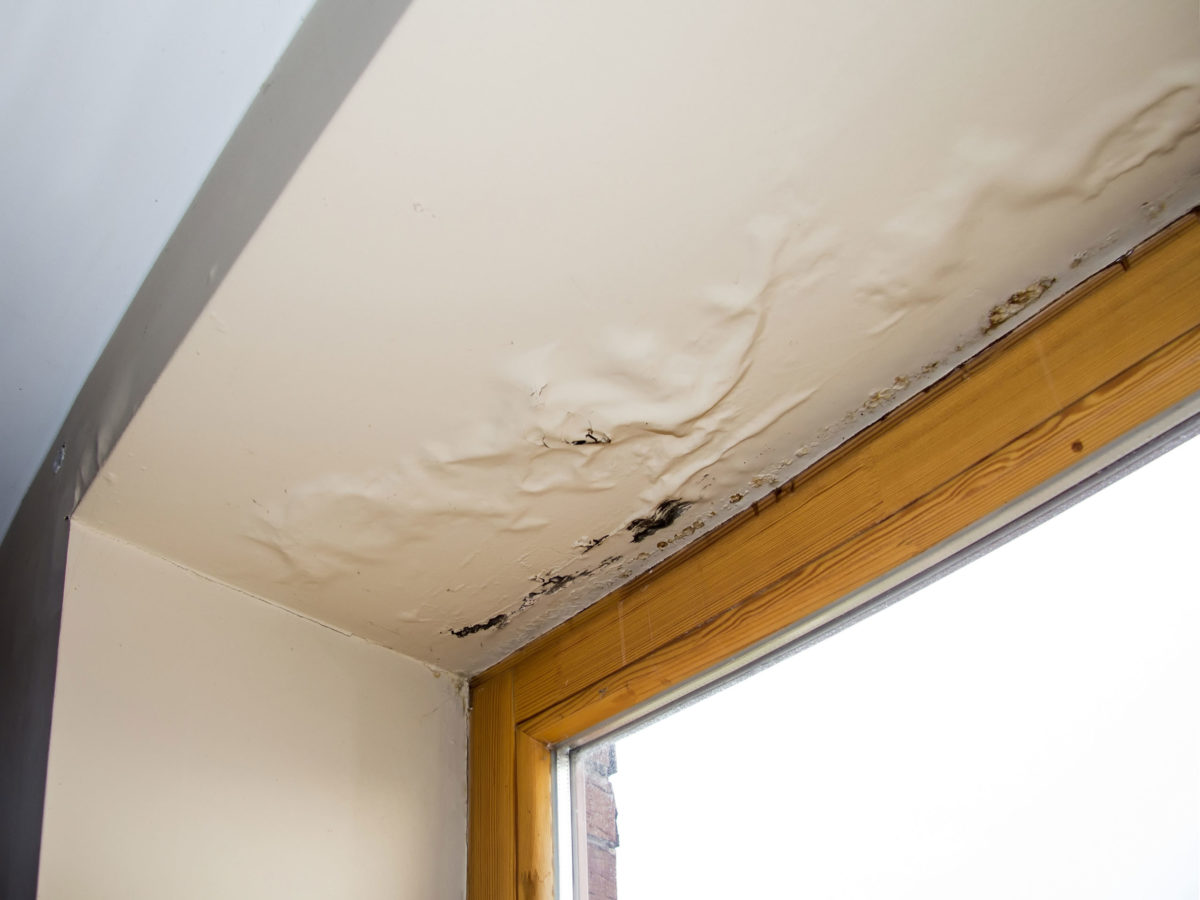
Vapor pressure building beneath the membrane peels it off its substrate. On single-ply roofs that reads as surface blisters; on built-up and modified-bitumen systems it shows as interply blisters and delamination between plies. A blister is never just cosmetic. It marks pressure and moisture in the layers below and a weak point that will eventually open.
Saturated insulation loses its stiffness. The boards swell, cup, and separate at the joints, and that telegraphs through the membrane as ridges tracking the insulation seams and as soft, springy areas underfoot. When a roof gives a little as you cross it, the insulation under that spot has usually let go.
Wet insulation does almost nothing thermally. As the moisture spreads, the building leaks conditioned air through the roof, the cooling bill climbs through our long summers, and the layer that was supposed to be saving energy turns into a liability.
This is the stage that flips a manageable repair into a replacement. Persistent moisture against a steel deck corrodes it, and on a building that has run with wet insulation through a roof cycle or two, the deck can be perforated and structurally compromised. Reach the moisture before it gets to the deck and you have a repair. Reach it after, and you are rebuilding.
The Vapor Retarder, and Why It Lets Buildings Down
A roof assembly manages interior moisture through a vapor retarder, and where that layer sits relative to the insulation is the entire ballgame. In a humid climate like ours, vapor drive runs predominantly upward and outward, from the warm, moist interior toward the cooler exterior, which means the vapor retarder belongs below the insulation, on the warm side. Put it in the wrong place, above the insulation, or let it be torn, discontinuous, or simply missing, and the assembly stops working with the building physics and starts fighting them. Vapor pushes up, meets a cold surface, condenses, and has nowhere left to go.
That is exactly why recovering over a humidity-damaged roof without fixing the vapor management guarantees a repeat failure. We have been called back to roofs where a previous contractor laid fresh membrane over wet insulation and a misplaced retarder, and the new roof was already failing a couple of seasons later because the underlying moisture trap was never addressed. Diagnosing the vapor strategy, not just dressing the symptom, is the step that actually ends the problem.
How We Pin Down Where the Water Is
We do not guess at the wet areas. We map them. Infrared moisture scanning, flown after sunset when saturated insulation glows warmer than the dry field around it, shows the location and the spread of moisture under a membrane that still looks intact. We confirm the thermal anomalies with core cuts at the flagged spots, and those cores let us read the insulation condition, the deck beneath it, and precisely where the vapor retarder sits and what shape it is in. On any Knoxville building without a documented moisture survey in the last few years, we recommend an infrared scan as part of any serious assessment, because the gap between catching wet insulation early and catching it after deck corrosion sets in is the gap between a patch and a full replacement.
Drawing the Repair-or-Replace Line
When the survey shows discrete wet zones bordered by sound, dry assembly, we repair. That means cutting out the saturated insulation, replacing it with new dry board, restoring the membrane over the repair, and re-sealing the edge metal and flashings in the affected area. When saturation runs past roughly a quarter to a third of the roof field, or when deck corrosion has compromised the structure, repair stops penciling out and replacement becomes the right call, sometimes with deck remediation written into the scope. We lay the infrared findings, the repair option, and the replacement option side by side with honest numbers, so you decide with the whole picture in front of you rather than reacting to whichever symptom happened to surface first.
Common Questions About Humidity Damage Roof Repair in Knoxville
How do you find damage you cannot see from the surface?
Infrared thermal scanning, run after sunset when the temperature gap between wet and dry insulation is widest. Wet insulation holds the day's heat and reads warmer on the thermal image as a defined zone. We confirm those zones with core cuts, which also reveal insulation compression, deck corrosion, and the position and condition of the vapor retarder.
What actually traps the moisture in the assembly?
In Knoxville's humid climate, vapor drive carries interior moisture upward through the roof. If the vapor retarder sits in the wrong position, above the insulation rather than below it, or is torn or missing, that vapor condenses inside the insulation when it meets a cooler layer. Over time it saturates the insulation, corrodes the steel deck, and delaminates the membrane, all without a drop of rain ever crossing the surface.
Can a humidity-damaged roof be repaired rather than replaced?
Often, yes, when an infrared survey shows discrete wet zones with dry assembly around them. We cut out the wet insulation, replace it with dry material, restore the membrane, and re-seal the local flashings. Full replacement becomes the better path when saturation exceeds roughly a quarter to a third of the roof or when deck corrosion has set in. We provide the survey report and a repair-versus-replace cost comparison once the diagnosis is done.
How fast does it worsen if we wait?
Steadily, and it compounds. Wet insulation provides no thermal resistance, so cooling costs rise, and deck corrosion accelerates the longer moisture sits against the steel. A roof reading fifteen percent wet coverage, left alone for a couple of seasons, can climb to forty or fifty percent by the next survey, turning a repair into a replacement. Early diagnosis is what keeps the scope small.
Will the repair just fail again?
Not if the vapor problem gets corrected. These failures recur because someone patched or recovered without fixing the misplaced or missing vapor retarder underneath. We diagnose the vapor strategy and address it as part of the repair, so the assembly works with the building physics instead of against them.
Get a Moisture Survey on Your Knoxville Roof
If your commercial roof is blistering, ridging, feeling soft underfoot, or quietly driving up the cooling bill, the cause may be interior humidity rather than a leak. An infrared moisture survey will tell us where the water is and how far it has traveled. Reach out and we will get the survey scheduled and lay out your repair and replacement options clearly.