The one building type where a leak is never just a leak
On most commercial roofs a small leak means a stained ceiling tile and a service call. Over a cleanroom, a compounding suite, or a research bench, the same drip can mean a contaminated batch, a quarantined product, ruined instrumentation, and a documentation trail somebody has to explain to a quality auditor. The buildings that line our research economy run on that intolerance for failure, and we roof them with it front of mind. The goal on a lab roof is not to manage leaks well. It is to never give one a path in.
Knoxville sits at the doorstep of one of the densest research corridors in the Southeast. Oak Ridge National Laboratory and the broader Oak Ridge science complex sit just west on Highway 95, the University of Tennessee Research Park at Cherokee Farm runs analytical and materials labs along the river south of campus, and life-science and contract-lab tenants cluster through the Pellissippi Parkway and Hardin Valley business parks. Add the medical research tied to the UT Medical Center campus and you have a steady inventory of buildings where a roofer has to understand cleanroom pressure, exhaust chemistry, and access protocol before stepping onto the deck. That is the work we do.
Cleanroom HVAC curbs and pressure you cannot disturb
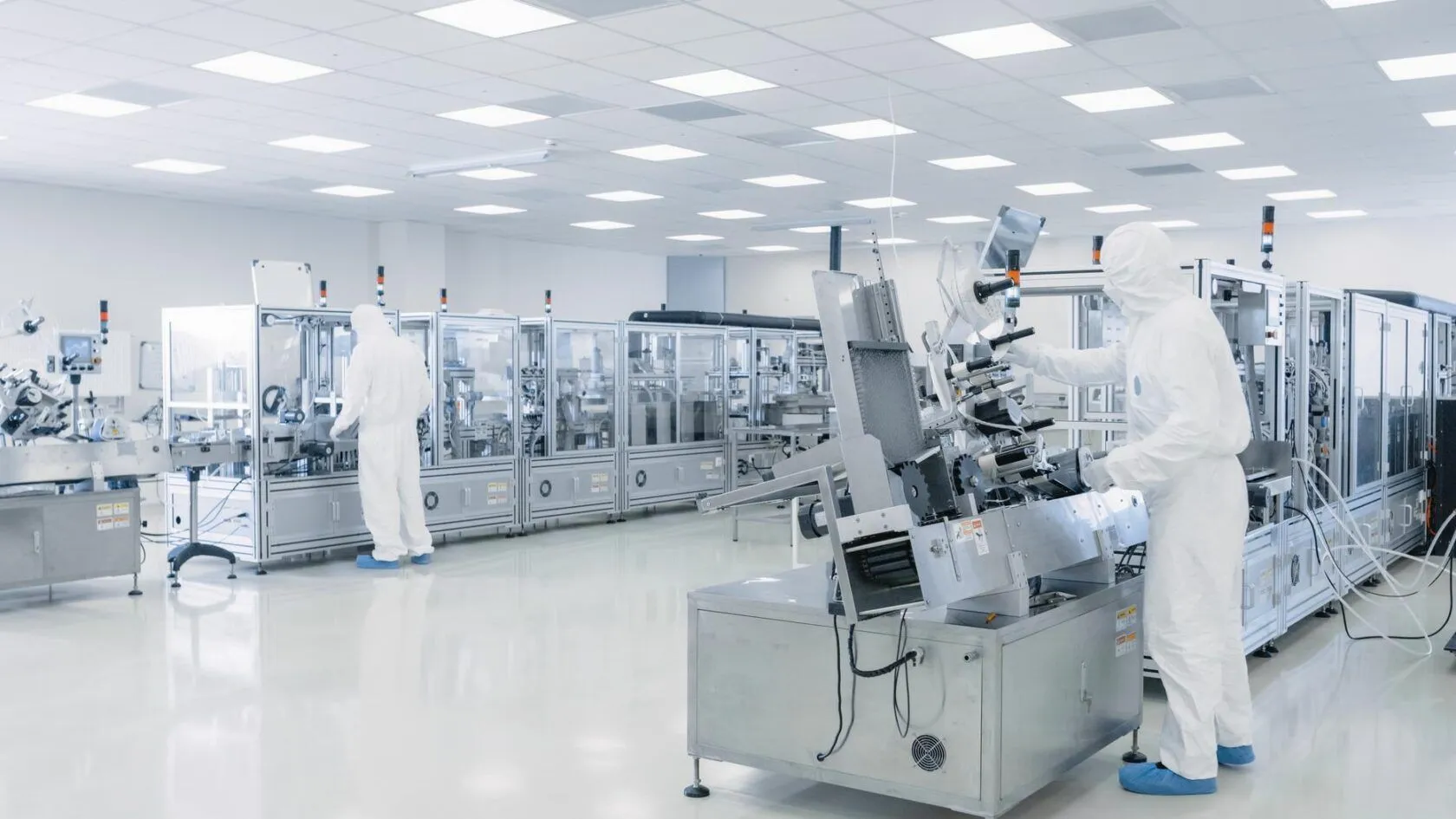
The defining feature of a pharma or lab roof is the density of rooftop mechanical and how tightly it is tied to what happens below. Cleanrooms hold engineered pressure differentials, positive in some suites, negative in others, and that balance runs through the supply and exhaust units sitting on the roof. Flash a curb wrong, leave an opening overnight, or disturb a unit during tear-off and you can swing the pressure in a classified space and trigger a recovery and re-certification before anyone is allowed back to work. We coordinate every penetration near a cleanroom air handler with the facility's MEP team, schedule that work into planned HVAC windows, and confirm the space comes back into balance before we move on.
Exhaust stacks that chew through the wrong membrane
Lab exhaust is its own hazard to a roof. Fume-hood and process stacks discharge solvent, acid, and other corrosive vapors that can condense on the stack and rain back down onto the membrane around it, etching standard sheets in a tight ring that no general warranty covers. We do not guess at this. We get the exhaust-stream composition from the facility's engineers and spec a chemical-resistant membrane, usually a heavier PVC or KEE sheet, in the zones that sit downwind of those stacks, while the rest of the roof can run a more conventional assembly.
Vibration, conduit, and the rest of the rooftop crowd
Between cleanroom air handlers and exhaust stacks sit chillers, generators, building-automation conduit, gas lines, and instrument racks. A research roof can carry the penetration count of a hospital on a fraction of the footprint. We map and individually flash every one of them and document the lot, because on these buildings the closeout package is part of the deliverable, not a formality.
Access is part of the schedule
You do not show up to a regulated lab and start working. Pharmaceutical manufacturing, controlled-substance handling, and many federal-adjacent research buildings in the Oak Ridge orbit require contractor credentialing, background coordination, and sometimes escorts before a crew sets foot on site. We start that process in pre-construction, weeks ahead of mobilization, so the whole crew is cleared by day one and you are not burning a mobilization day at a guard shack. Escort rules, badge access, and restricted zones all get written into the coordination plan up front.
A closeout that survives an audit
The buildings around UT and Oak Ridge are some of the highest-value assets in the regional inventory, and their owners hold roofing to the same documentation standard as the rest of the facility. We deliver contractor qualification records, the site safety plan, material submittals reviewed by the facility engineer, daily work reports, manufacturer installation documentation, system certification where it is required, and registered warranty paperwork, all formatted to slot into the facility's quality system. When an inspector asks about the roof, the answer should already be on file.
Pharmaceutical & Laboratory Roofing Questions
Any penetration work near a cleanroom supply or exhaust connection can disturb the pressure differential, so we coordinate it with the facility MEP team and schedule it into planned HVAC maintenance windows. After the work we confirm the differential has recovered and verify that no dust or debris entered the air paths above the cleanroom envelope before we consider that zone closed out.
We identify the exhaust-stream chemistry with the facility engineers first, then spec a chemical-resistant single-ply, typically a heavier PVC or KEE sheet, in the ring of roof downwind of each stack where condensing vapor lands. Standard TPO is not appropriate next to solvent or acid exhaust, so we isolate those zones with a more resistant membrane while the balance of the roof runs a conventional system.
Yes. Many facilities in the Oak Ridge and UT research orbit require contractor credentialing, background coordination, and sometimes escorts. We start that process during pre-construction, usually two to three weeks ahead, so the full crew is cleared before mobilization. Escort and access rules go into the coordination plan so there are no surprises at the gate.
We do. University labs and biotech buildings bring the same access and coordination demands, often with multi-tenant lab suites that each run their own HVAC and exhaust for different programs. We are comfortable working alongside Environmental Health and Safety offices and biosafety committees to schedule and document work on those buildings.
A full package: contractor qualification records, the safety plan, material submittals reviewed by the facility engineer, daily work reports, manufacturer installation documentation, system certification where required, and registered warranty paperwork. We format it to fit the facility's quality management system so it is audit-ready the day we finish.