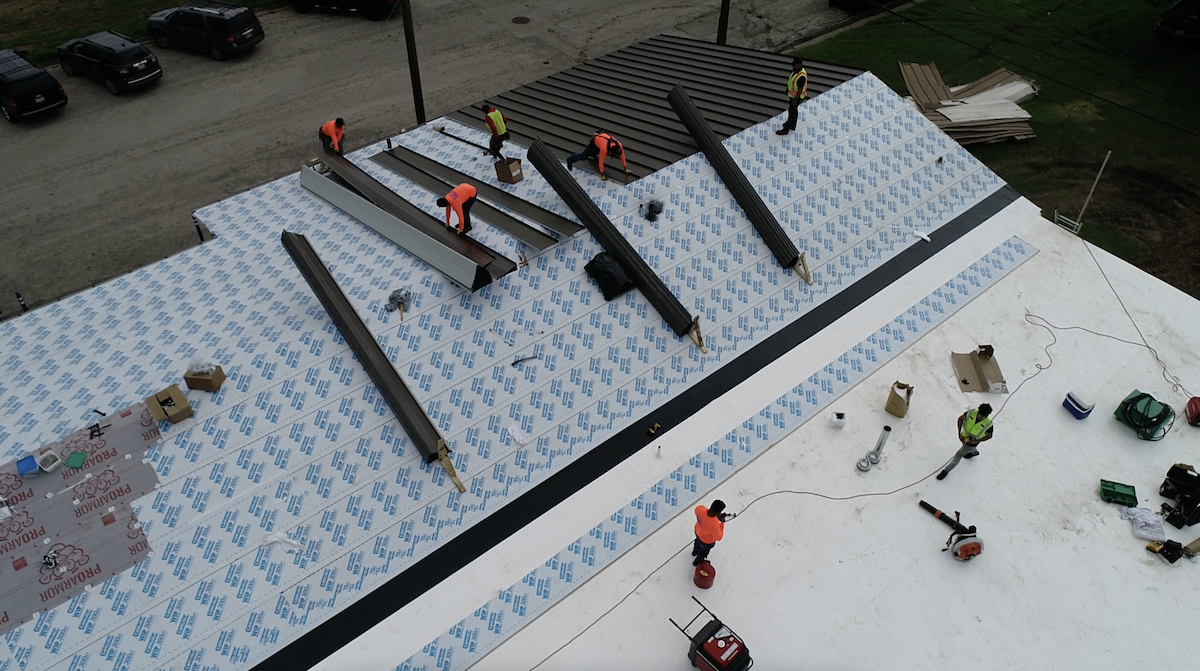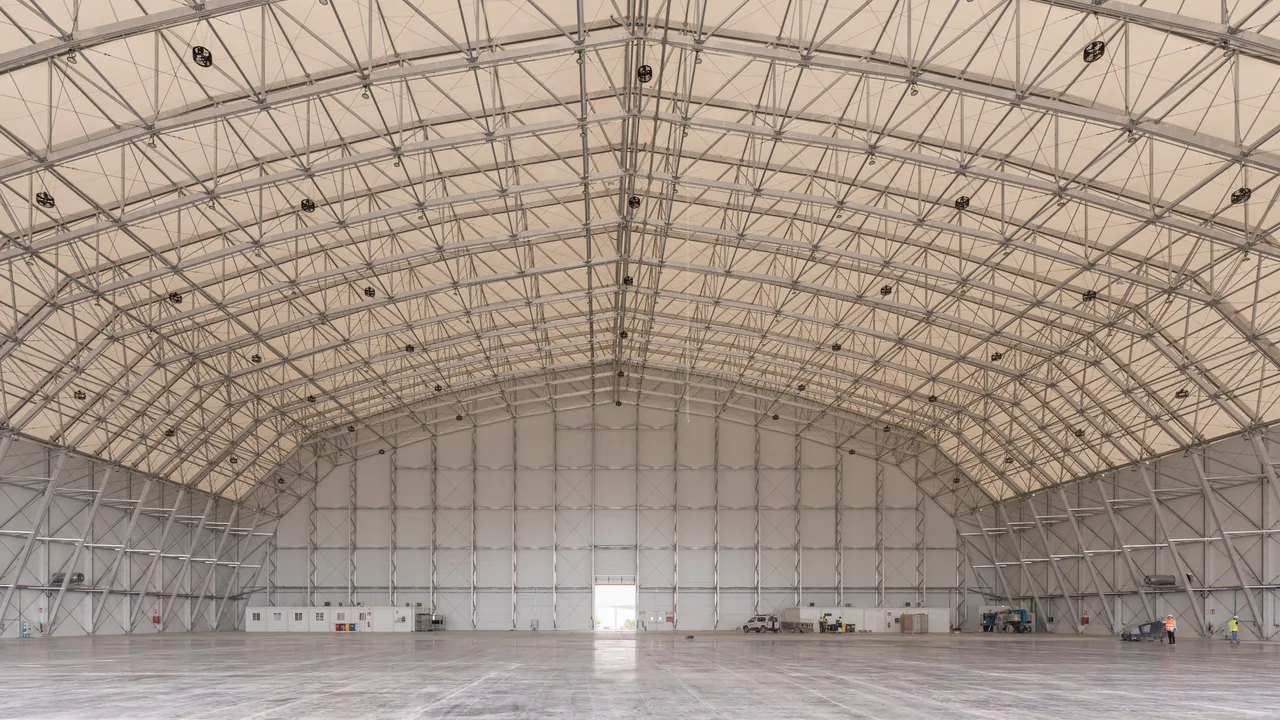
Commercial roofing for aerospace and defense facilities in Knoxville, TN operates under a different set of constraints than standard commercial work. Facilities tied to active weapons programs, aircraft production, national laboratories, or military installations carry access control requirements, security clearance protocols for onsite supervisors, and coordination with facility security officers before a single material lift is scheduled. Our crews understand that requirement, and we build it into every bid, schedule, and site plan.
Major Aerospace and Defense Facilities in the Knoxville Area
The greater Knoxville area serves as the gateway to the Oak Ridge National Complex, Y-12 and ORNL, which collectively represent some of the most security-demanding and technically complex roofing contracts in the Southeast, with DOE-standard compliance requirements for all facility work.
The roofing systems on aerospace and defense structures carry stakes beyond weather protection. A failure over an active manufacturing floor, whether that means a fighter jet assembly line, a missile guidance lab, or a satellite integration cleanroom, can trigger production shutdowns, contaminate precision components, or compromise facility certifications. The zero-tolerance standard these clients apply to their primary mission is the same standard we apply to the roof above it.
Our defense and aerospace roofing work includes planned replacement, emergency roof repair under time-critical operational constraints, and new construction roofing for facility expansions. We carry the insurance coverage, bonding capacity, and documented quality procedures that federal facility managers and prime contractor subcontract teams require. When a facility expansion schedule is tied to a DOD delivery milestone, "we'll get to it" is not a close-out answer, we staff to the schedule and document every phase.
Aerospace & Defense Roofing Questions
Yes. We work with facility security officers to complete the necessary base access credentialing for our crew members. Lead time for clearance varies by installation, we factor it into the project schedule upfront rather than discovering it during mobilization.
We provide full prevailing wage certified payroll (if applicable), material submittals for spec compliance, daily logs, third-party inspection coordination, LEED or sustainability documentation if required, and a final warranty package formatted for federal facility records systems.
We develop a phased work plan with the facility manager and base operations officer, sectioning the roof into work zones, maintaining dry-in protection on any open sections, and scheduling loud or disruptive work during approved windows. Our pre-construction checklist includes noise, vibration, dust, and chemical exposure considerations for every zone adjacent to active operations.
We work on the building envelope, roofs, walls, and flashings, which in most cases does not require classified access. For facilities where roof access itself requires a clearance, we identify that requirement early and work with the government contracting officer to plan accordingly.
TPO and PVC membrane systems are most common for new and re-roofing work due to their resistance to chemical splash and UV degradation. Standing seam metal is preferred on high-bay structures where long-term performance and minimal maintenance are prioritized. We always match the system to the specific exposure, a satellite integration cleanroom has different requirements than a motor pool.
Data center roofing for colocation facilities, server rooms, and mission-critical buildings throughout Knoxville, TN.
Knoxville's climate is humid subtropical, moderated by its location in the Ridge and Valley physiographic province and its elevation of roughly 900 feet above sea level. The city receives approximately 47 inches of annual rainfall, distributed throughout the year without a pronounced dry season. Summers are hot and humid, with dewpoints regularly in the upper 60s and heat index values above 100°F on peak summer days. Winters are mild compared to other Southern Appalachian cities but include ice storm events that can deposit significant ice loads on rooftop equipment and drainage systems. The combination of year-round moisture, summer heat stress, and occasional winter icing requires data center roof assemblies designed for sustained performance across the full climate spectrum.
TVA's control computing infrastructure demands the highest standard of roofing reliability because utility grid control systems are classified as critical infrastructure under federal NERC CIP standards. A water intrusion event that reaches a TVA computing environment could trigger regulatory notifications, operational disruptions, and potentially grid reliability implications. Our approach to utility operational technology facilities begins with understanding the consequence of failure, which informs every specification decision from membrane thickness to flashing detail complexity to the frequency of preventive maintenance inspections. TVA facilities we work on receive the same engineering rigor applied to the most demanding commercial data center projects in any market.
Oak Ridge National Laboratory's high-performance computing leadership, ORNL hosts some of the world's most powerful supercomputers, including the Frontier exascale system, creates a downstream market effect for Knoxville commercial data centers. Technology companies, research spinoffs, and HPC service providers that orbit the ORNL ecosystem require commercial data center space in the Knoxville metro, and the talent concentration associated with ORNL's research programs makes Knoxville increasingly competitive for private data center investment. Each of these facilities requires roofing that can support the dense mechanical equipment loads and stringent environmental controls that high-performance computing demands.
Rooftop mechanical loads deserve particular attention for HPC and compute-dense data centers in the Knoxville market. Modern high-density computing cabinets generate heat loads that require more cooling capacity per square foot than traditional server deployments, driving higher densities of precision cooling units, cooling towers, and dry coolers on the rooftop. A structural deck designed for a general commercial office building may not safely carry the concentrated point loads created by a dense cooling plant added above a converted or upgraded data center. Our pre-construction structural assessments for Knoxville facilities include deck load calculations, area load distribution analysis, and coordination with the structural engineer of record to identify any deck reinforcement needed before additional mechanical loads are craned into position.
Vapor management in Knoxville's climate requires attention to the transitional vapor drive conditions that characterize a mid-South location. Unlike deep South climates where vapor drive is consistently outward through the roof assembly, Knoxville's winter conditions, with interior data center spaces maintained at 65°F to 75°F and exterior temperatures occasionally dropping to the teens, can create inward vapor drive. A vapor retarder analysis based on ASHRAE 160 methodology and Knoxville's specific psychrometric data is essential to avoid placing the vapor retarder on the wrong side of the thermal plane, which can create condensation zones within the assembly that degrade insulation and corrode structural components.
Ice storm risk in Knoxville is a maintenance consideration that distinguishes East Tennessee from the deeper South. Ice events typically occur two to four times per winter season, coating rooftop equipment, drain openings, and perimeter edge metal with ice that can accumulate to 0.5 to 1.0 inches of radial thickness. Frozen drains create ponding conditions that persist until the ice melts, adding temporary load that may exceed the structural design allowance on older buildings. Our pre-winter maintenance service for Knoxville data centers includes verification that all drains are clear and properly gasketed, inspection of ice guard flashings at roof edges, and documentation of any drain configurations where ice damming has historically caused ponding issues.
The commercial roofing market in Knoxville benefits from Tennessee's lack of a state income tax, which has attracted business investment and data center development that would otherwise gravitate to Atlanta or Charlotte. As the Knoxville market grows, facility owners face re-roofing decisions on commercial buildings that were not originally designed as data centers. Converting an existing commercial building to data center use requires a careful assessment of the existing roof system's compatibility with the new use, including load capacity for added mechanical systems, vapor management adequacy for continuous cooling operation, and the integrity of penetration details for the additional conduit, cable, and mechanical infrastructure that a data center conversion requires.
Sustainability practices for Knoxville data center roofs can leverage Tennessee's abundant hydroelectric power base, TVA's hydroelectric system provides a significant portion of the region's electricity with essentially zero carbon emissions. Data center operators in the TVA service territory often have access to TVA's Green Invest program for renewable energy matching, and a cool roof specification that reduces cooling energy consumption can be documented as part of the facility's overall carbon footprint reduction commitment. Our project documentation for Knoxville data centers includes the reflectance and emittance data needed to calculate the annual cooling energy reduction from a cool roof installation, supporting sustainability reporting requirements.
Selecting a roofing contractor for a Knoxville data center or utility computing facility requires verifying the contractor's experience with mission-critical project protocols, not just standard commercial roofing work. The operational requirements of a TVA facility or an HPC-adjacent data center are fundamentally different from those of a retail building or a warehouse. Ask for documented references from mission-critical, utility, or research facility projects in East Tennessee. Verify manufacturer certifications, OSHA 30 compliance, and familiarity with lockout/tagout and utility safety management procedures. The right contractor sees the data center roof as the first element of the facility's critical infrastructure, because that is exactly what it is.
Q: What makes data center roofing in Knoxville different from standard commercial roofing?
A: Data center roofs in Knoxville must support higher rooftop mechanical loads, maintain vapor management continuity for continuous 24/7 HVAC operation, and provide zero-tolerance waterproofing for mission-critical computing environments. TVA utility standards and ORNL-adjacent research market expectations set a higher performance bar than standard commercial projects.
Q: How does ice storm risk in Knoxville affect data center roof maintenance?
A: Ice events can clog roof drains, creating ponding loads that may exceed structural design limits on older buildings. Pre-winter drain verification, ice guard flashing inspection, and documentation of historically problematic ponding zones are essential maintenance activities for every fall service visit.
Q: Is a vapor retarder needed for data center roofs in Knoxville's climate?
A: Yes, but its positioning must be based on a climate-specific vapor analysis. Knoxville's transitional climate creates both outward and inward vapor drive at different times of year, and the vapor retarder must be positioned to prevent condensation within the assembly during both seasonal conditions.
Q: What structural considerations apply when converting a commercial building to data center use in Knoxville?
A: Added cooling equipment, generator sets, and cable tray systems create rooftop loads that may exceed the original structural design allowance. A licensed structural engineer must verify deck capacity, and the roofing contractor must specify load-distribution equipment support stands rated for the actual equipment weights.
Q: How can Knoxville data center operators document cool roof energy savings for TVA sustainability programs?
A: Membrane manufacturer SRI (Solar Reflectance Index) data, combined with the facility's cooling plant efficiency (COP) and TVA rate information, supports a calculable annual energy savings estimate. Our project documentation packages include the manufacturer reflectance and emittance certifications needed for Green Invest program applications.
What information should we send before a Commercial Real Estate and REITs roof walk?
Before a Commercial Real Estate and REITs roof walk, send the building location, roof age if known, roof access instructions, leak photos, tenant restrictions, and prior roof reports. Those details let us shape the inspection around the actual roof problem instead of arriving with a generic checklist.
Can Commercial Real Estate and REITs be handled while the building stays occupied?
For Commercial Real Estate and REITs, occupied-building work depends on access, odor, noise, staging room, weather exposure, and how much roof must be opened at one time. We phase the work around dry-in, tenant protection, loading paths, and the operating schedule below the roof.
How do we compare repair, coating, recover, and replacement for Commercial Real Estate and REITs?
For Commercial Real Estate and REITs, we compare moisture evidence, layer count, deck condition, drainage, age, storm exposure, roof traffic, and future use before naming a scope. That evidence is what separates a repair file from a restoration plan, a recover option, or a replacement budget.
Do you promise manufacturer certification or insurance approval for Commercial Real Estate and REITs?
For Commercial Real Estate and REITs, we do not invent credentials, promise claim outcomes, or write warranty language before the facts support it. We document conditions, identify manufacturer or carrier questions, and keep recommendations tied to reviewable roof evidence.
What makes Knoxville planning different for Commercial Real Estate and REITs?
Knoxville planning for Commercial Real Estate and REITs has to account for downtown access, UT and hospital-area traffic, Pellissippi and Oak Ridge industrial corridors, humid Tennessee Valley heat, severe thunderstorms, hail, freeze-thaw movement, leaf debris, and wind-driven rain.